Turning the Other Cheek: Christianity's Answer to Nietzsche's Moral Divide
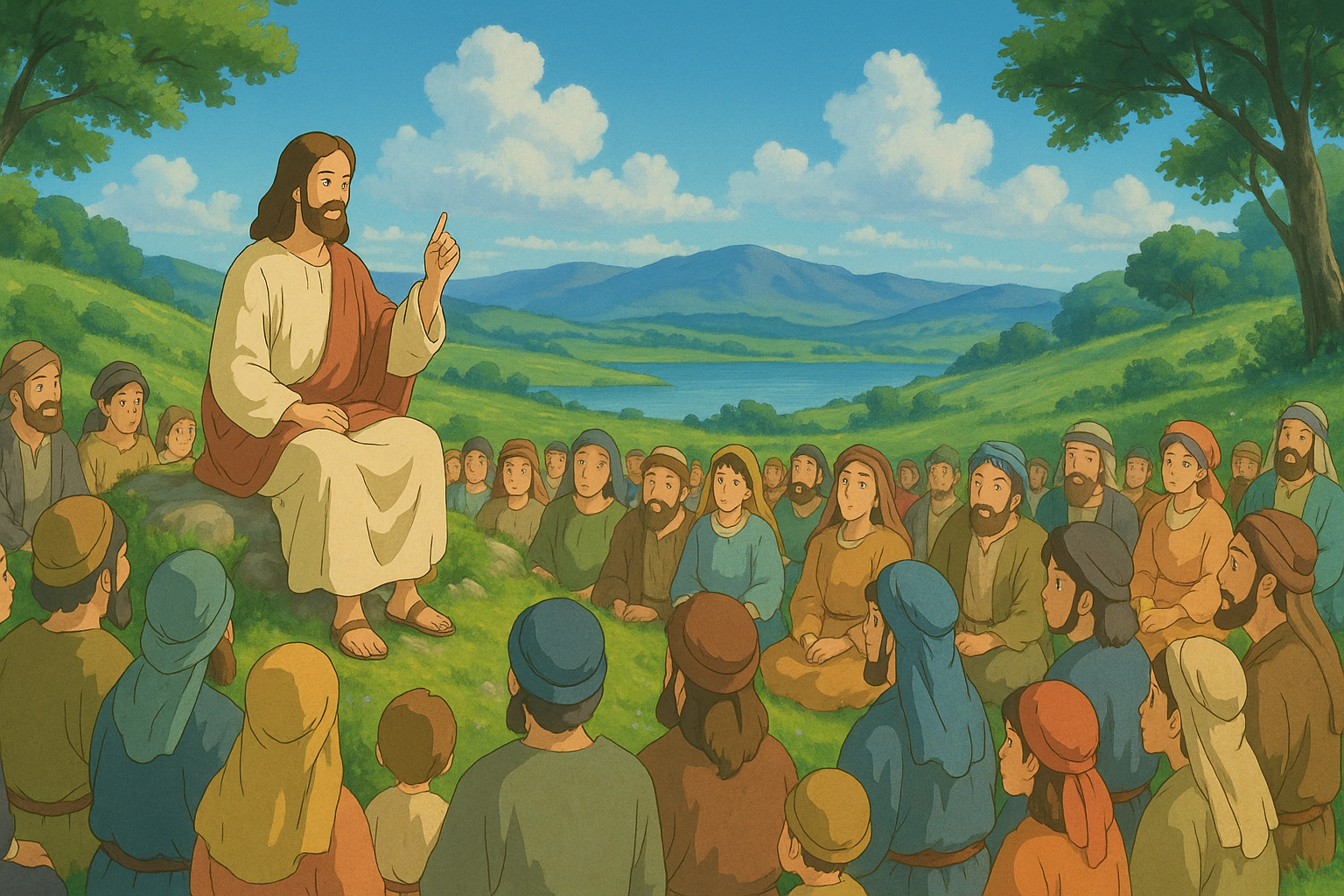
Two thousand years ago, Jesus stood on the mountain, speaking to the forgotten of the earth. And he said to them: “Blessed are the meek, for they shall inherit the earth.” It was not a call to cowardice. It was a quiet revolution, a redefinition of power itself. But somewhere along the way, we forgot what meekness meant. In our confusion, the earth was not inherited by the meek, but by the loudest and the most resentful.
On one side, the cult of victimhood reigns — a world where the ability to suffer becomes the highest currency, where weakness is moralized and grievance is weaponized. On the other, we see a hollow cult of power — self-serving, domineering, and disconnected from any sense of nobility. Public discourse is fractured, political life poisoned, and personal relationships reduced to status games and emotional manipulation. Somewhere between these poles — dominance and submission, pride and self-pity — lies Servant Mastery, the forgotten ethic of Christian strength.
The Master And The Slave: Nietzsche’s Moral Divide
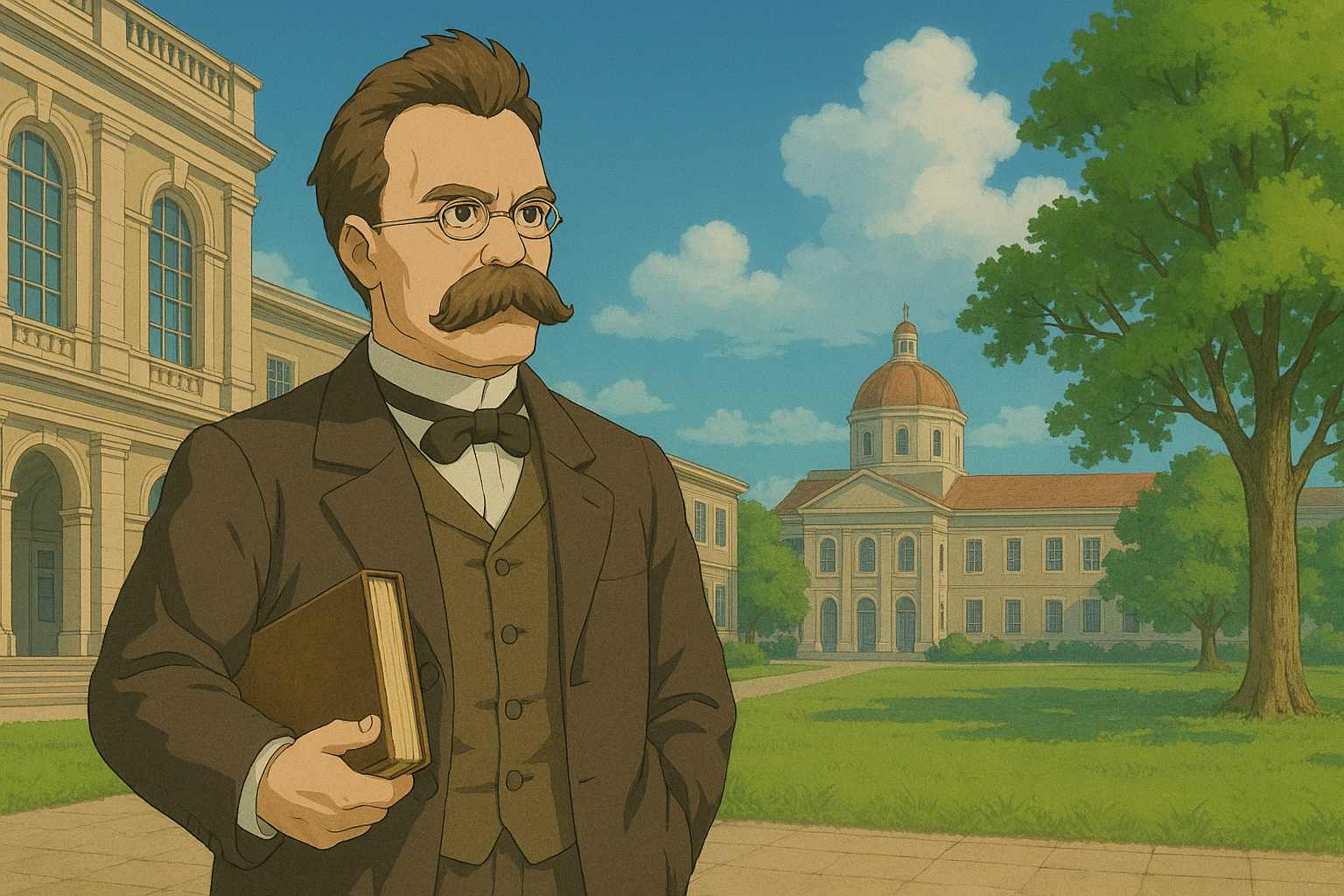
Friedrich Nietzsche’s famous distinction between master morality and slave morality remains one of the most debated frameworks in moral philosophy. At its core, it is a conflict between two moral instincts: one rooted in power, the other in weakness.
Master morality originates from nobility — from those who affirm their power, vitality, and excellence without shame. It is a morality born from overflowing strength. The noble man creates values from within: good is what enhances life, what is admirable, powerful, beautiful. Evil is simply what is base, cowardly, and pitiable. Master morality is proud, aristocratic, and self-defining.
Slave morality, by contrast, emerges from the perspective of the oppressed. It defines good in opposition to the master: good becomes humility, meekness, suffering, obedience. Evil becomes pride, power, and freedom. It is not a creative morality — it is reactive. Nietzsche argued that Christianity took this morality and turned it into a global ethic, sanctifying victimhood and resentment under the guise of compassion.
Slave Morality: The Seduction of Victimhood
Of the two, slave morality is more prevalent in modern moral discourse, and for good reason. It speaks to the suffering, the oppressed, the downtrodden. It demands that we care for the vulnerable and uplift the marginalized.
There are good reasons people cling to victimhood. For many, it began as survival, a way to make sense of pain, exclusion, or powerlessness. But its shadow side is insidious. It can easily become a morality of weaponized weakness, where the most righteous is not the one who overcomes, but the one who suffers the most. It is a morality that can punish excellence, resent success, and turn suffering into a form of spiritual vanity.
Take, for example, Saint Rose of Lima — the first saint canonized from the Americas and a deeply revered figure in Catholic tradition. She is celebrated for her piety, charity, and mystical devotion. But she is also known for her extreme acts of penance. She wore a spiked crown to emulate Christ’s suffering, rubbed lye into her face to mar her beauty, and practiced extreme fasting to the brink of death. In her world, the path to holiness was through self-erasure. This was not meekness in the Biblical sense — this was self-annihilation. When suffering becomes proof of sanctity, morality collapses into masochism.
Today’s cultural landscape is littered with similar examples. From social media feeds overflowing with performative self-pity to the hyper-fragile online policing of language and microaggressions, slave morality has metastasized into a system where weakness is virtue and strength is suspect. But its reach extends far beyond the digital world. It manifests in real-world phenomena: the valorization of victimhood in gender ideology, where biological reality is subordinated to feelings; the paralysis of nations facing mass immigration but afraid to assert boundaries for fear of moral condemnation; and the erosion of civilizational confidence.
The Nietzschean “Last Man” is not a myth — he scrolls endlessly, avoids conflict, and seeks safety above all. He retreats from responsibility, abdicates judgment, and embraces nihilism under the guise of tolerance. He is harmless, bitter, and quietly resentful of those who rise.
Master Morality: The Perils of Power
But if slave morality distorts goodness by glorifying weakness, master morality is no less dangerous. At its worst, it glorifies raw dominance — strength for its own sake — and reduces virtue to ego. The noble man becomes indifferent to justice, blinded by pride, and insulated from correction. In a culture governed by unchecked master morality, such as many proud cultures of the past, there is no room for mercy, only conquest. The vulnerable are seen as expendable, and greatness becomes indistinguishable from tyranny. Power without reverence, after all, becomes brutality.
Consider Achilles, a hero who perfectly embodies master morality. He is noble, brilliant, and consumed by his own sense of honor. He does not ask for permission to act. He defines value through excellence, courage, and glory, and acts accordingly. But his greatness is double-edged. When slighted, he withdraws from battle and lets his comrades die. When enraged, he desecrates the body of his enemy. There is beauty and grandeur in his being, but also danger. Master morality without grace becomes pride without limits.
Today’s power structures tell a different story of unrestrained strength. We see it in Big Pharma, where truth is engineered to fit profit margins, and patients become lifetime subscriptions. In Silicon Valley, algorithms are built not to enlighten but to addict, trading human attention for ad revenue. Celebrities flaunt indulgence without meaning, selling dominance and desire as virtue. This is the modern face of master morality: conquest without reverence, ego without accountability.
Between the Lion and the Lamb

These two moralities — the sanctification of suffering and the deification of strength — are not just different. They are in opposition. One scorns the meek. The other punishes the strong. And both are reactive. Master morality fears weakness. Slave morality resents power. That is why no synthesis between them has ever lasted. They are locked in a psychological war, each defined by the rejection of the other.
Thinkers have tried to bridge the gap. Stoicism teaches restraint, but often lacks compassion. Liberalism seeks balance, but too often becomes compromise without clarity. Nietzsche’s own Übermensch is more riddle than resolution, promising transcendence but leaving the moral direction undefined.
But perhaps the answer was never missing — merely misunderstood.
Nietzsche saw Christianity as merely glorifying victimhood. But he overlooked something crucial. Centuries before he diagnosed the war between the strong and the weak, a carpenter from Nazareth gave the most subversive command ever spoken to the powerful and the oppressed alike. Hidden in plain sight, Jesus delivered a line that is often ridiculed, rarely taken seriously, and almost never fully grasped:
“But I say unto you, That ye resist not evil: but whosoever shall smite thee on thy right cheek, turn to him the other also.”
— Matthew 5:39 (KJV)
Rethinking “Turning the Other Cheek”: The Quiet Defiance of Christ
Jesus’s command is often misread as a call for docility — the height of slave morality. But historically, a slap to the right cheek from a right-handed person is a backhanded slap — a calculated insult meant to demean. Jesus is not encouraging passivity. He is teaching a subtle but potent form of defiance.
Notice the phrasing: he does not say, “Let him strike your other cheek.” That would be passive. Instead, he says, “Turn the other cheek.” It is an act — not of weakness, but of restraint. You are not allowing yourself to be beaten; you are refusing to mirror the aggression. You take the insult, and instead of retaliating, you deliberately offer the other cheek. It is not weakness — it is will.
To turn the other cheek is to say: You have tried to shame me, but I will not be shamed. You can strike again, but you cannot unmake my dignity. It is a bold refusal to play the game of revenge — a demonstration of strength through restraint. This is not cowardice. This is control. This is sovereignty.
Meekness Isn’t Weakness
This control and sovereignty is grounded in a deeper understanding of meekness. The Greek word for meekness used in the Bible is praus. This word was used to describe a war horse: strong, spirited, and capable of violence — but under disciplined control. Biblical meekness is not weakness. It is power held in check. The ability to respond with force — and choosing not to. This is the moral strength at the heart of Christ’s teaching.
Modern Christianity has often lost this nuance. Meekness has been flattened into mere niceness — a passive tolerance, a willingness to be walked over. But this interpretation severs it from its roots. Meekness, rightly understood, is not about being small. It is about being capable of greatness, and choosing not to use it for your own ego. It is the moral stance of the strong man who does not need to prove himself, because his power is already internalized.
This small shift in meaning changes everything. Instead of rewarding weakness, it reveals the quiet nobility of self-mastery. Instead of encouraging silence, it calls for principled restraint. And instead of pitting humility against strength, it fuses them into one: the lion who does not roar, because he does not need to.
Servant Mastery: The Forgotten Path
Step into a Catholic Church and you’ll see it immediately: the Crucifix. Christ, bloodied and broken, nailed in humiliation. We sing of his sacrifice, his suffering — and rightly so. But too often, we forget: this was no helpless victim.
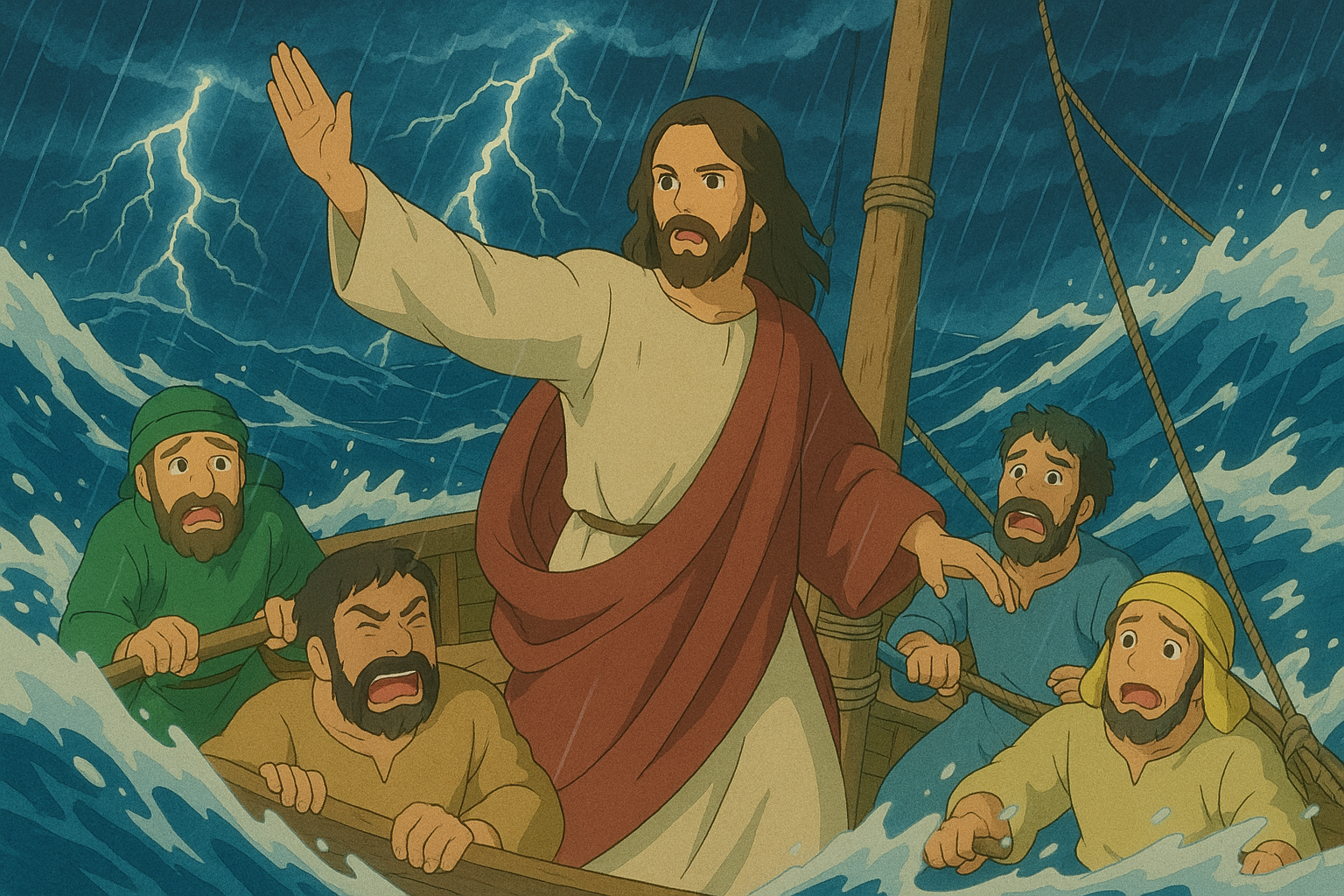
Jesus was not just a servant — he was powerful. Crowds followed him. Demons fled from him. He healed with a word, calmed storms with a command, and walked on the waves he created. Religious leaders feared him. Political authorities were disturbed by him. His presence carried weight — not weakness.
And yet, this same man allowed himself to be mocked, flogged, and crucified. Not because he was overpowered, but because he was fully in control.
“No man taketh it from me, but I lay it down of myself. I have power to lay it down, and I have power to take it again. This commandment have I received of my Father.”
— John 10:18 (KJV)
Strength First, Then Submission
And here’s a truth that’s often overlooked: Jesus didn’t begin with the cross. He didn’t live a quiet life and then decide to die for humanity in anonymity. He rose to power first. He built influence. He performed miracles no one could ignore. His teachings captivated thousands and shook the foundations of the religious elite. His very existence disrupted the balance of power so profoundly that the authorities had to conspire to silence him. He was powerful first, before he willing chose to sacrifice himself.
Churches often preach the Lamb, but rarely the Lion. We remember the cross, but forget the throne. What Jesus models is neither the resentment of the weak nor the pride of the strong. It is what we might call Servant Mastery — power governed by purpose, strength shaped by love, kingship expressed through sacrifice.
Servant Mastery in Human Hands
Some might object: But Jesus is God. Of course he could do this. What about us? We are flawed. We doubt. We fall. How can mere mortals live out this kind of strength?
That’s where David enters, not as a counterpoint to Christ, but as a bridge. David is no pristine saint. He is fully human — a shepherd, a warrior, a king, a sinner, and a man after God’s own heart. His story doesn’t give us perfection, it gives us process.
In David, we see the full arc of Servant Mastery made real: power gained, power abused, power surrendered, and power redeemed. He doesn’t always get it right. But he keeps returning to the right source.
David: The Sword and the Harp
David’s story is not one of perfection, but of transformation. He is the perfect case study for Servant Mastery, not because he always chooses rightly, but because he wrestles, sins, repents, and returns. He carries both sword and lyre, justice and poetry. He defeats giants, commands armies, and rules a nation — yet also weeps publicly, fasts in sorrow, and begs God for mercy.
What makes David remarkable is not just his strength, but how that strength is constantly brought into relationship with God. He does not embody perfection; he embodies submission. He is what a man looks like when he allows his flaws to be judged, his power to be restrained, and his victories to serve a higher purpose. His life reveals three essential moments that bring the concept of Servant Mastery down to earth.
David vs. Goliath: Strength Without Arrogance
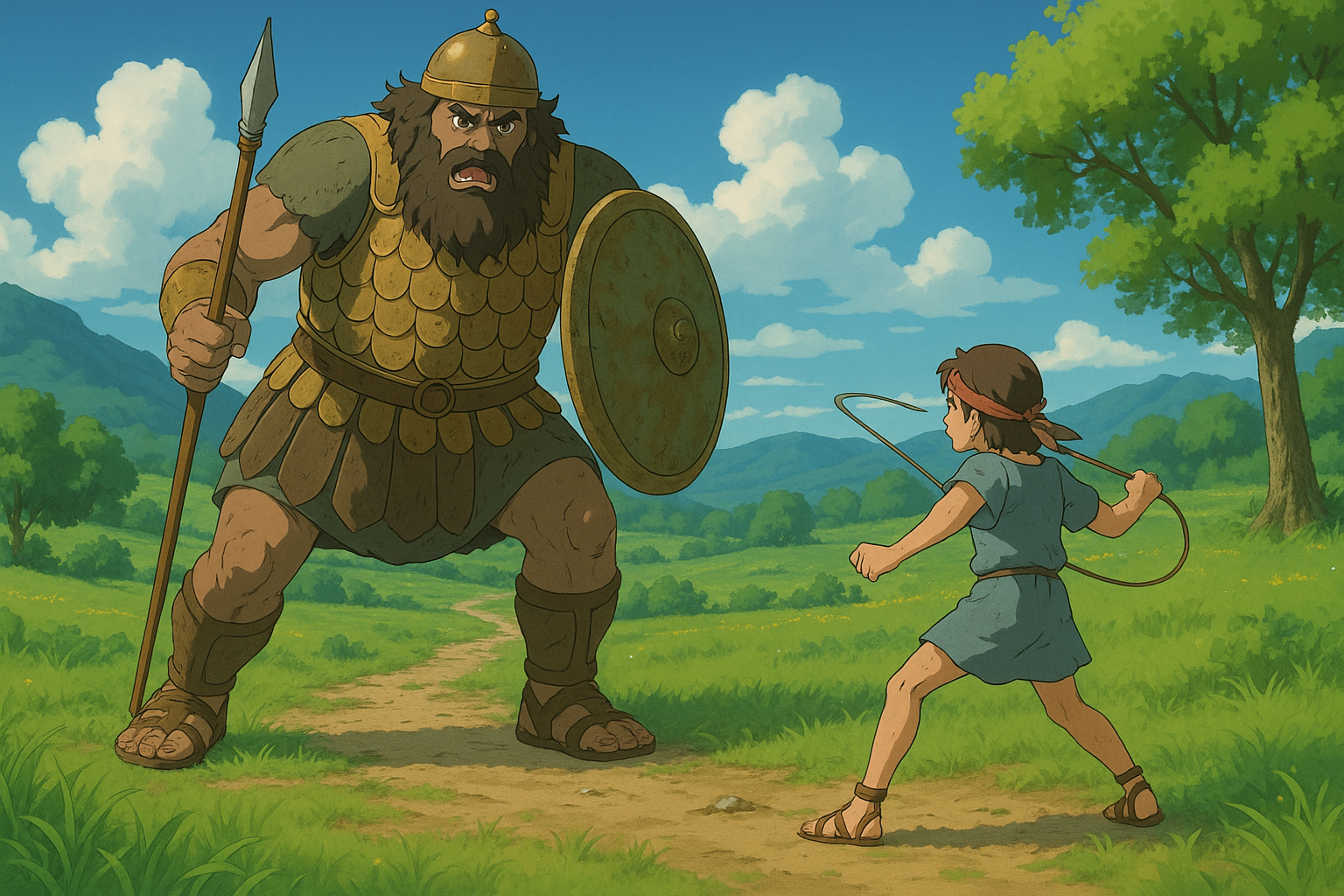
The story of David and Goliath is one of the most well-known in the Bible, but it is often misunderstood. In the popular imagination, it is told as a simple tale of the weak defeating the strong — the shepherd boy against the giant, the underdog triumphing through faith. And while that surface reading contains some truth, it misses the real power of the story.
David is not the trembling underdog modern retellings often portray. He is confident — even defiant — in his faith:
“The LORD that delivered me out of the paw of the lion, and out of the paw of the bear, he will deliver me out of the hand of this Philistine.”
— 1 Samuel 17:37 (KJV)
He declines Saul’s armor, not out of humility, but because he does not need it. He carries no sword. Just a sling, five stones, and a name — the name of the living God. His strength is not borrowed, not performative. It is integrated, quiet, rooted.
Like Achilles, David knows he cannot lose, but what he does with that information cannot be more different. Achilles fights for personal honor. His strength is dazzling, but it curves inward — serving ego, vengeance, and legacy. David, by contrast, stands before his enemy with quiet confidence. But his cause isn’t himself. He fights not for glory, but for God. There’s no rage in him, no dramatic threats. He walks into battle not to prove greatness, but because he is already grounded in something greater. His strength is not about making a name — it’s about honoring one.
Where Achilles flexes his wrath, David centers his resolve. Where Achilles desecrates, David restores. David’s power lies in his restraint — in his choice to act without needing to exalt himself.
Achilles wields power to assert himself. David wields power to serve. That is the difference between Master Morality and Servant Mastery.
David Spares Saul: Power With Restraint
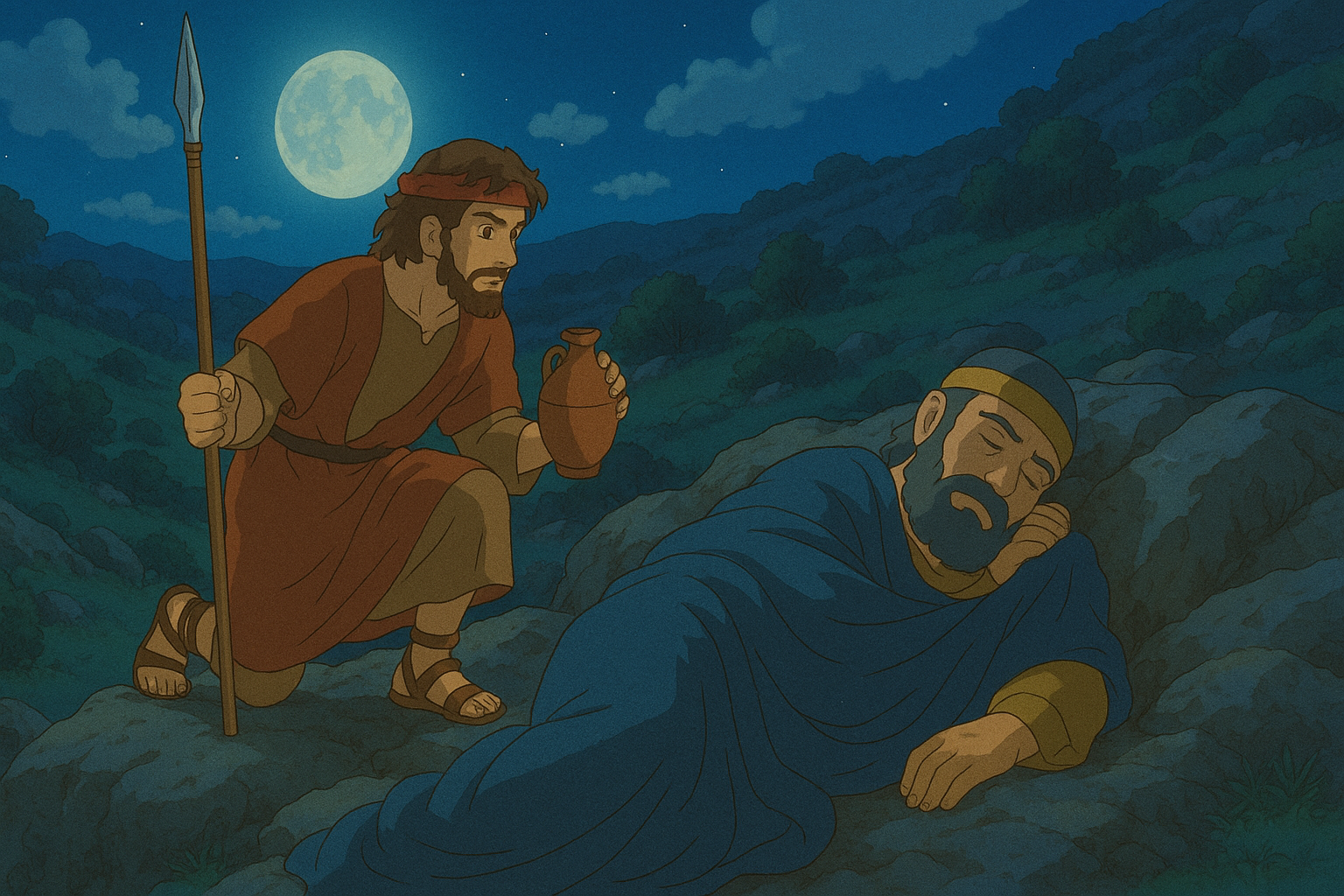
Of all the trials David faced, few were as morally charged as the two moments when he had Saul’s life in his hands. Anointed by God but not yet king, David was relentlessly hunted by Saul, who saw him as a threat to his throne. Twice, David found his enemy completely vulnerable. The first time was in a cave at En-gedi. Saul entered alone to relieve himself, unaware that David and his men were hidden in the shadows. It was the perfect moment, one strike would end David’s exile, fulfill the prophecy, and crown him king. His men urged him on: God has delivered him to you. The throne was within reach — all he had to do was take it.
But David holds back:
“The LORD forbid that I should do this thing unto my master, the LORD’s anointed.”
— 1 Samuel 24:6 (KJV)
He cuts the corner of Saul’s robe instead — a symbolic gesture. But even this act weighs on him. His conscience is not dulled by desperation. It is sharpened by reverence. He is not ruled by the logic of vengeance, but by the fear of God.
Later, in the wilderness of Ziph, the same opportunity arises. Saul again falls into David’s hands, this time in a camp, surrounded by sleeping soldiers. David’s companion urges him to strike. But again, David refuses to shed blood:
“Destroy him not: for who can stretch forth his hand against the LORD’s anointed, and be guiltless?”
— 1 Samuel 26:9 (KJV)
Instead, he takes Saul’s spear and water jug — tokens of life and rule — and leaves the camp, calling out from afar to show his mercy.
This is not weakness. This is strength governed by principle. David could have killed Saul. Twice. And no one would have blamed him. But he didn’t. He chose restraint, not revenge; mercy, not ambition.
This is Servant Mastery in its clearest form: power in hand, but not wielded for ego. David’s strength is not proven by how many enemies he slays, but by those he could have slayed but did not.
David and Bathsheba: Repentance Without Performance
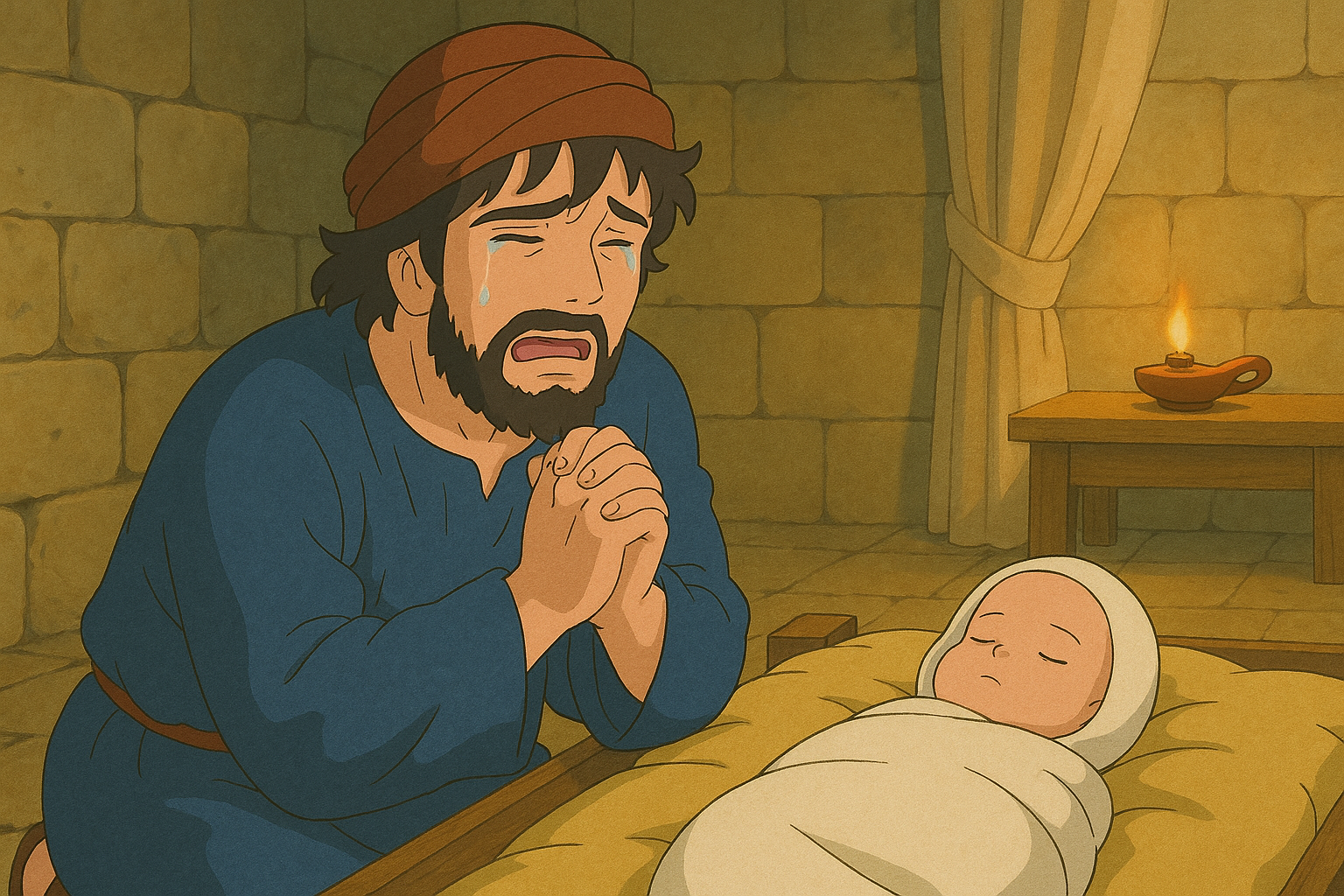
David’s life is marked by triumphs, but also by a devastating fall. At the height of his power, he commits one of the gravest sins in Scripture. He sees Bathsheba, takes her, lies to cover it up, and murders her husband Uriah. In that moment, he becomes everything a king should not be.
But when the prophet Nathan confronts him, David doesn’t excuse, deflect, or posture. He simply breaks:
“I have sinned against the LORD.”
— 2 Samuel 12:13 (KJV)
From that brokenness, he writes Psalm 51 — not to perform repentance, but to plead for renewal:
“Create in me a clean heart, O God; and renew a right spirit within me.”
— Psalm 51:10 (KJV)
David weeps. He fasts. He begs God to spare his child. But when the child dies, David does something extraordinary: he rises. He washes. He changes his clothes. And he worships. No spectacle. No self-punishment. No attempt to manipulate God with prolonged grief. His repentance is quiet, sincere, and decisive.
This is not sorrow as performance — it is repentance as return.
Unlike the penance of Saint Rose, who wore suffering as a form of sanctity, David does not inflict pain on himself to prove devotion. He does not spiral into despair to earn moral credibility. He mourns, but then moves forward. His sorrow is not about signaling humility; it’s about surrendering control. He gives back to God the power he had abused, and accepts the consequence with dignity.
This is what sets David apart from the path of slave morality. He doesn’t treat grief as virtue or weakness as holiness. His repentance is not about appearing broken, it’s about being made whole again.
This is Servant Mastery in action: not the glorification of suffering, but the willingness to surrender power when necessary, and the strength to rise afterward. David doesn’t collapse into weakness — he disciplines it. He doesn’t cling to guilt — he transforms it into responsibility. That is the difference.
David’s greatness lies not in moral purity, but in moral clarity. When he falls, he knows how to kneel. And more importantly, he knows how to rise.
Jesus: The Fulfillment of David

David shows us what it means to wrestle with greatness — to stumble, rise, and return. He is the blueprint of Servant Mastery in motion: strong yet flawed, passionate yet penitent. He pleads with God. He sins. He repents. He grows. His life is sanctification in real time — the slow shaping of strength into service.
But David is not the destination. He is the shadow of something greater.
Jesus does not merely walk the same path — he completes it. He is the Son of David, yet he is more than David ever could be. Where David falls, Jesus stands. Where David sins and seeks mercy, Jesus carries sin and offers mercy. David’s strength was shaped through failure and return; Jesus’s strength was pure from the start — tested, yet unbroken.
As it is written:
“And, behold, thou shalt conceive in thy womb, and bring forth a son, and shalt call his name JESUS. He shall be great, and shall be called the Son of the Highest: and the Lord God shall give unto him the throne of his father David.”
— Luke 1:31–32 (KJV)
He is the lion who chooses to walk as a lamb. The rightful king who rides not a warhorse, but a donkey. The master who strips off his robe to wash the feet of his followers. In Jesus, Servant Mastery is not just embodied — it is exalted.
He does not wield power to prove it. He restrains it to redeem.
And in that restraint, we see something more than human wisdom. We see the very nature of God. In Christ, Servant Mastery is no longer merely a moral ideal, it becomes a divine revelation.
What This Means for Us Today
We live in a world starving for Servant Mastery.
The clash between servant and master morality is no longer confined to philosophy classrooms — it defines the fractures running through our politics, our culture, and even our personal relationships.
Servant Mastery offers a way out. Not through compromise, but through transcendence. In a world fractured by false opposites, it calls us to become whole.
To Those Who Identify With Slave Morality

It’s understandable why so many embrace weakness today. When power is so often cruel, manipulative, or selfish, retreating from it can feel like the only moral choice. Better to be harmless than harmful, many think. Better to stay small than risk becoming like the oppressor.
But staying small is not virtue — it is paralysis.
Just because power is often abused doesn’t mean it must be. Power is not the problem. Ego is. The examples of David and Christ show us a better way: power governed by purpose, strength placed in service of something higher. David did not hide from the battlefield. Jesus did not flinch before Pilate. Neither conquered for themselves, but neither ran from the fight.
If you truly care for the downtrodden, then the call is not to stay weak, it is to grow strong enough to protect them. You do not feed the hungry by staying hungry. You do not lift the fallen by lying beside them. You do not save a drowning man by jumping in after him without first learning how to swim. You rise. You grow. You fight — not to dominate, but to defend. This is the path of Servant Mastery.
And if you fear that power will corrupt you, look again at Christ. He was power incarnate, yet he chose the cross over conquest, silence over self-defense, service over status. Not because he lacked strength, but because he mastered it. His greatness was not in having no power, but in being utterly unwilling to use it for ego.
If you’re afraid of becoming corrupted, you’re already ahead of those who are. That fear is not weakness — it’s the beginning of wisdom. Power doesn’t corrupt the watchful; it corrupts the careless. The man who fears his own pride is far safer with a sword than the man who worships his reflection.
Jesus, at the Sermon on the Mount, did not ask us to be weak. He asked us to be strong — and to rule ourselves before we ever tried to rule others. This is not a call to shrink. It is a call to become dangerous — not to the innocent, but to injustice. To carry power — and choose restraint. To stand tall — and still kneel. To become like Christ, a lion who serves.
To Those Who Identify With Master Morality
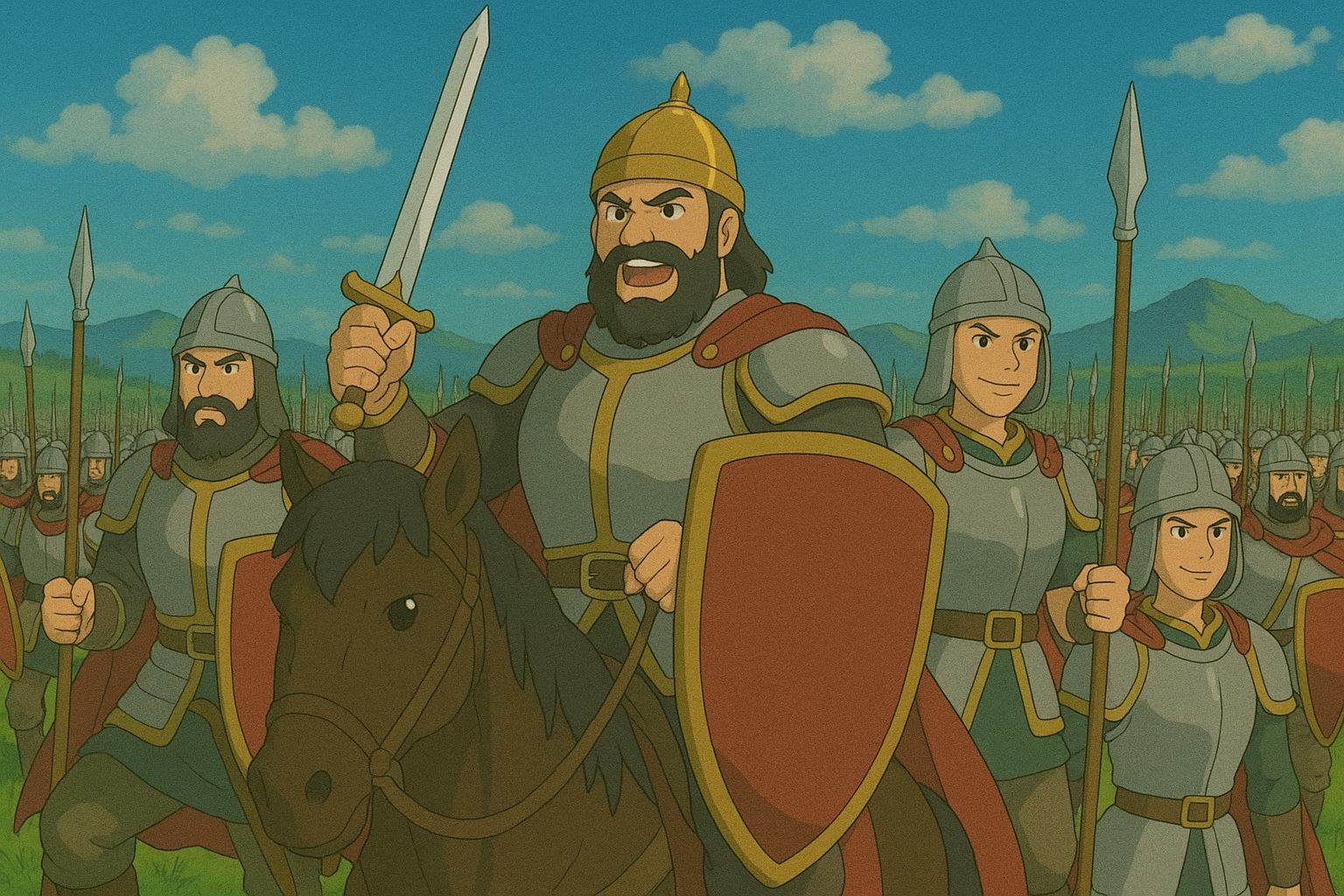
You are strong. You take risks. You take ground. And when you look at modern Christianity, you see weakness and walk away in disgust.
You see pastors moralizing about power they’ve never tasted. Churches obsessed with niceness, afraid of conflict, allergic to strength. Full of people who preach against sex, power, and wealth only because they have none, and have no means to acquire these things even if they wanted to. Why should the powerful listen to those who cannot even rule themselves?
But a flawed messenger does not make the message invalid. Do not confuse a feeble Church with a feeble Christ.
Jesus was not soft. David was not passive. Neither shied away from power, but neither wielded it for ego. If you are strong, do not run from Christianity because of how it’s been misrepresented. Explore it for yourself. Wrestle with the stories of David, the strength of Christ, the depth of Scripture.
Because here’s the truth: even if you conquer, even if you build empires and crush your enemies — at some point, the question will come: What for? Power for the sake of power may thrill for a time. Pleasure may satisfy for a season. But as every conqueror eventually learns, dominance is not the same as purpose. Ego cannot fill the soul. There will come a point where “just because I can” is no longer enough. As humans, we are not built to worship ourselves. We long for something greater — something enduring, something eternal.
Servant Mastery is the only path forward. Not the denial of strength, but the sanctification of it. Not guilt for being powerful, but a calling to use that power for righteousness. In Christ, the throne and the cross are not in conflict — they are fused. In David, the sword kneels before the Spirit. You don’t need to give up your edge. You need to give it aim.
You may find in Christ not weakness, but clarity. Not rules, but reason. Not surrender, but the only kind of mastery that lasts — the kind that knows when to lead, when to kneel, when to fight, and when to lay the sword down.
The Age of the Meek

The world needs neither weakness dressed as virtue nor pride disguised as strength. What it truly needs are individuals strong enough to serve. This brings us back to the Sermon on the Mount, where we began this article:
“Blessed are the meek: for they shall inherit the earth.”
— Matthew 5:5 (KJV)
Jesus calls us to be strong. To be the embodiment of praus. To be dangerous to evil. But also to choose restraint. To choose to wield our power for justice. And to choose to serve something greater than ourselves.
Because that, is how the meek will inherit the earth.